Abbey of Santa Maria Assunta at Conèo Badia a Coneo · Colle di Val d'Elsa (Siena, Tuscany)
A Romanesque Vallombrosan church, consecrated in 1124, at the crossroads of the Via Francigena and the Via Volterrana, five kilometres from Colle Alta. Barely present online, fully present in stone. This page tells it with facts you can verify and marks clearly what still has to be asked on site.
History in six dates
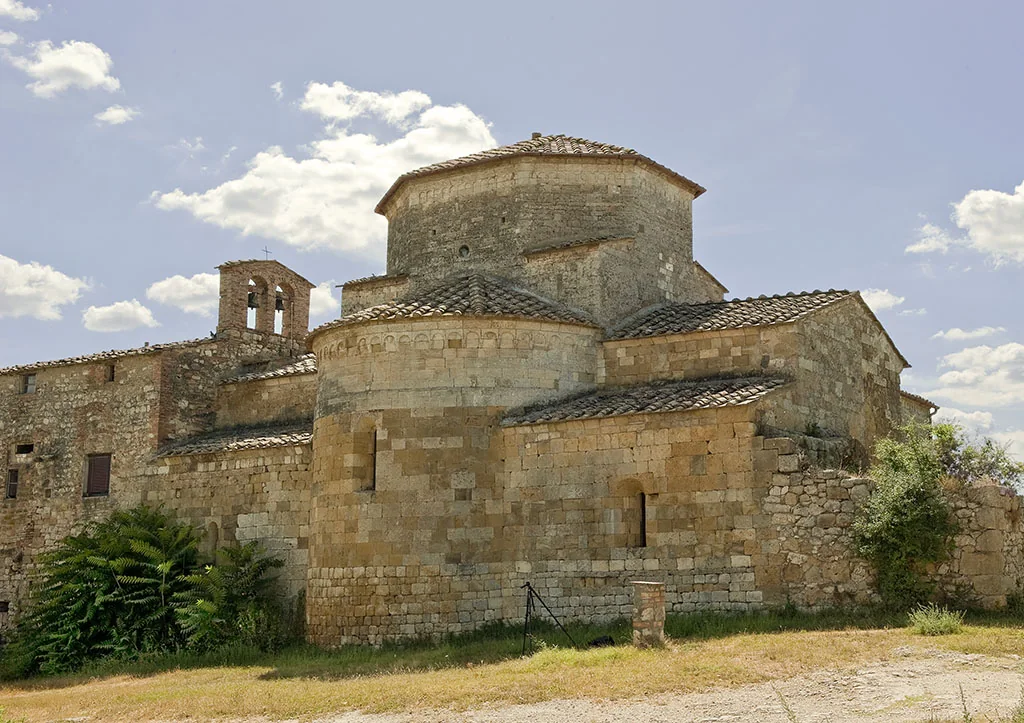
Around 1000 the monastery is founded under the Benedictine rule where the Via Francigena meets the Via Volterrana: one of the few monastic rest stops between Lucca, Florence and Siena. Between 1073 and 1076 the community joins the Vallombrosan order. After 5 May 1108 work begins on the church we see today; in 1124 it is consecrated. In the 18th century Baroque additions arrive; between 1920 and 1922 a restoration removes them and returns the Romanesque appearance.
Architecture: what to look at
Latin-cross plan with a single nave, projecting transept, three apses. Over the crossing rises the octagonal lantern tower. Inside, the stepped arch on hanging half-columns is the signature of Florentine Vallombrosan architecture. The outer walls alternate travertine and sandstone in horizontal courses.
Getting there
From Colle di Val d'Elsa, Conèo is a few minutes by car towards Volterra; on foot or by bike it is a detour on the Colle variant of the Via Francigena. Informal parking nearby; unpaved road for the last stretch.
Frequently asked questions
Where is Badia a Coneo?
At Conèo, Colle di Val d'Elsa (Siena, Tuscany), about 5 km from Colle Alta, near the crossroads of the Via Francigena and Via Volterrana. Coordinates 43.39921, 11.072835.
When was the abbey built?
Monastery c. 1000 (Benedictine), Vallombrosan from 1073-1076. Present Romanesque church begun after 5 May 1108, consecrated 1124.
Is Badia a Coneo open? Can you visit the interior?
Often closed; the exterior is always visible. Check interior opening times with the parish or the municipality before going.
What is there to see at Badia a Coneo?
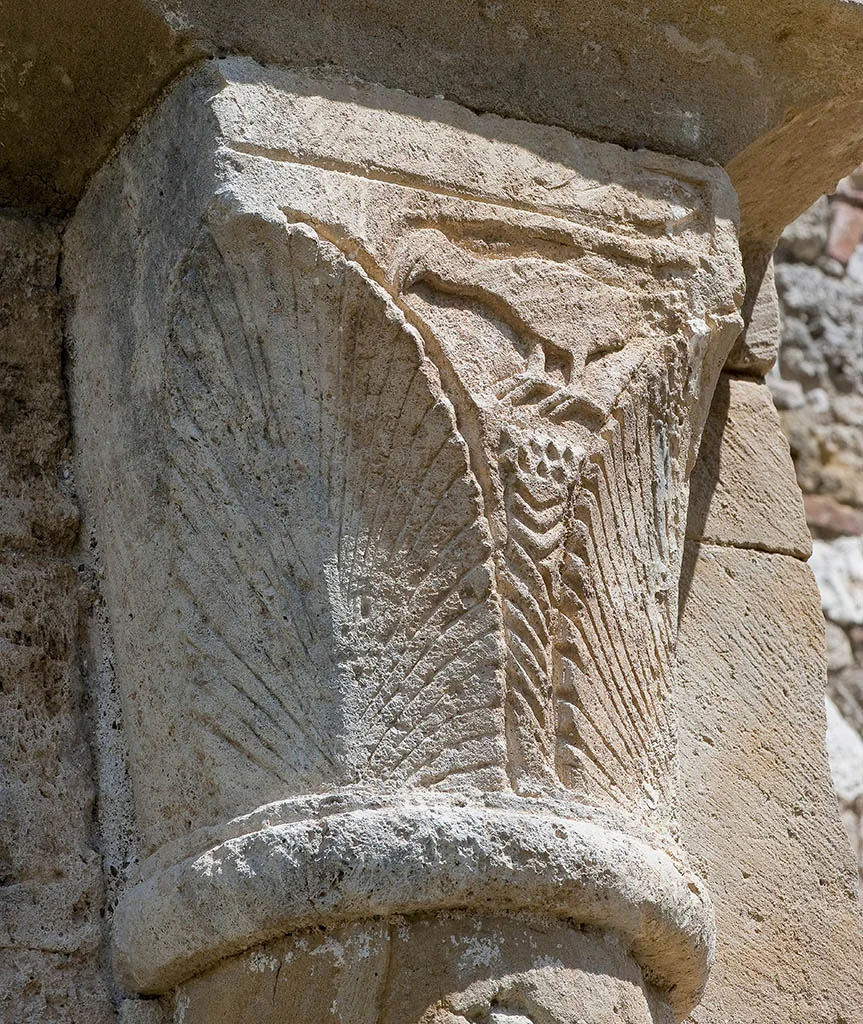
Latin-cross plan, single nave, projecting transept, three apses, octagonal lantern tower, travertine-and-sandstone masonry, carved capitals.
Around the abbey
Colle Alta Food & Beverage · The churches of Colle Alta · Via Francigena · dentrolemura.space · Mucca Viola Park
Open in Maps